Aita / Father

Édition 2011
Compétition internationale
  • Première française
De José María de Orbe
2010, 1h 25 min, Espagne
VOSTF

Avec Luís Pescador, Mikel Goneaga

Synopsis

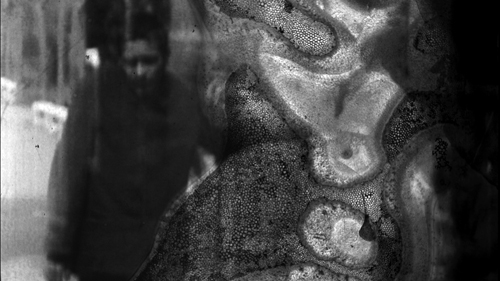
Aita figure sous la catégorie « drame », mais le mot ne convient pas. Le lieu qu’il occupe tient à la fois du documentaire, de la fiction et de l’essai. Il s’agit d’une vieille maison médiévale située dans le village basque d’Astigarraga, du gardien qui prend soin d’elle, du prêtre qui vient s’entretenir avec lui. Il n’y a pas d’histoire, à proprement parler, bien que le père du titre suggère que quelque affaire de filiation cherche ici à se dénouer. Il n’y a que l’attention amoureusement portée au lent, à l’irrésistible travail de la hantise : les ombres ou les moisissures sur des murs ; les sons qui tout à coup montent, symphonie, pluie, parole rare ; le jardin autour de la maison qui est aussi, étrangement, un jardin à l’intérieur de la maison. La hantise, on le sait, peut être une définition du cinéma : celui-ci est hanté, c’est l’art des fantômes ; des projections finiront d’ailleurs par ajouter leurs propres motifs, leur herbier à celui que dessinaient déjà les nuages, les feuilles, les taches… La tempête guette, l’orage va éclater, né de la double accumulation du temps et des images dans les murs. La hantise, on le sait également, est une autre manière de désigner le simple fait d’habiter : celui qui habite est un hôte, autrement dit un esprit, un fantôme en puissance. Aita est un splendide poème visuel – extraordinaire travail du chef opérateur Jimmy Gimferrer – qui rappelle ce qu’habiter veut d’abord : être habité, devenir soi-même « en demeure ».


Aita comes under the category ‘drama’, but the word does not suit the film; it sits somewhere between documentary, fiction and art house. It is about an old medieval house in the Basque village of Astigarraga, the caretaker who looks after it and the priest who comes to talk with him. There isn’t strictly speaking a plot, although the father in the title hints at the relationships that threaten to unravel here.  There is just the doting attention paid to slowness and to the irresistible work of haunting. The shadows and the rising damp on the walls; the sounds which crescendo out of nowhere, a symphony, the rain, the odd word, the garden around the house which is also strangely a garden within it. Haunting, as we know, can also be a definition of cinema. It is haunted, it is the art form of ghosts, the screenings end up by adding their own patterns, their herbarium to the garden already defined by the clouds, leaves and marks…The storm gathers, thunder is going to clap , borne out of the combination of time and the images on the walls. We are also aware that haunting is another way of describing the simple act of living in a house. The person who lives in a house is a host, in other words a spirit, potentially a ghost.
Aita is a splendid visual poem – with extraordinary work by the DOP Jimmy Gimferrer – which reminds us what inhabiting means: to be inhabited, to become oneself “under supervision”.

Édition 2011
Compétition internationale
  • Première française
De José María de Orbe, 2010, 1h 25 min
Espagne VOSTF

Avec Luís Pescador, Mikel Goneaga

Images et bande-annonce