Les Chants de Mandrin

Édition 2011
Compétition internationale
  • Première française
De Rabah Ameur-Zaïmeche
2011, 01h47, France

Avec Jacques Nolot, Christian Milia-Darmezin, Kenji Levan, Rabah Ameur-Zaïmeche, Salim Ameur-Zaïmeche, Sylvain Roume, Nicolas Bancilhon, Abel Jafri, Sylvain Rifflet, Sylvia Albaret

Synopsis

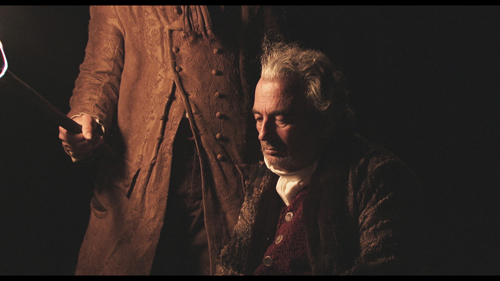
Après l’exécution de Louis Mandrin, célèbre hors-la-loi et héros populaire du milieu du XVIIIe siècle, ses compagnons risquent l’aventure d’une nouvelle campagne de contrebande dans les provinces de France. Sous la protection de leurs armes, les contrebandiers organisent aux abords des villages des marchés sauvages où ils vendent tabac, étoffes et produits précieux. Ils écrivent des chants en l’honneur de Mandrin, les impriment et les distribuent aux paysans du royaume… Ce synopsis fait-il assez sentir de quoi il retourne, dans le quatrième long métrage de Rabah Ameur-Zaïmeche, après Wesh Wesh, qu’est-ce qui se passe ?, Bled Number One et Dernier Maquis ? De cinéma et de politique, sans doute. Des premières années du XXIe siècle, aisément reconnaissables derrière celles qui précédèrent la Révolution française. De la France de Sarkozy, de la guerre civile que certains – RAZ n’est pas le seul – y diagnostiquent. De tout cela, des vertus de l’allégorie et de la métaphore, mais pas seulement. RAZ se filme, il filme une troupe, la sienne, reconduite et enrichie de film en film. Il filme une campagne, une guerre, mais de quelle guerre s’agit-il ? Celle des bandits ou celle qui consiste aujourd’hui à faire du cinéma en toute liberté et autonomie ? Et n’est-ce pas plutôt d’hospitalité qu’il est question, celle qui pousse les bandits à sympathiser avec un marquis, Rabah à inviter l’immense Jacques Nolot et même le philosophe Jean-Luc Nancy ? Est-il d’autre collectif, d’autre maquis que cinématographique ? Le mystère du film tient là, dans l’intervalle entre création et résistance, charme et rage, chant et cri.


After the execution of Louis Mandrin – a famous outlaw and popular hero in the mid-18th century – his companions embarked on embarked on a risky new campaign of smuggling in the French provinces. Protected by their weapons, the bandits set up illegal markets on the outskirts of villages, where they sold tobacco, textiles and valuables. They wrote songs honouring Mandrin, printed them and distributed them amongst the peasants of the realm.
Does this synopsis give a good enough feel of RAZ’s fourth feature? After Wesh Wesh what’s going on? Bled Number One and Dernier Marquis? From film to politics, no doubt, the turn of the 21st century is easily recognizable behind the veil of the period leading up to the French revolution. From Sarkozy’s France to the civil war – RAZ is not the only one to draw these parallels. With all this – the virtues of allegory and metaphor, but that is far from the whole story. RAZ films himself, he films the troupe, his own, reunited and added to from one film to the next. He shoots the countryside, a war but which one? The bandits’ war, or the struggle today to make films with complete freedom and autonomy? Is it not more a question of hospitality? Is it not that which encourages the bandits to sympathise with the marquis and to invite the phenomenal Jacques Nolot and even the Philosopher Jean-Luc Nancy? Is it a question of another group, another marquis rather than cinematography? Therein lies the mystery of the film, in the space between creation and resistance, charm and rage, singing and shouting.

Édition 2011
Compétition internationale
  • Première française
De Rabah Ameur-Zaïmeche, 2011, 01h47
France

Avec Jacques Nolot, Christian Milia-Darmezin, Kenji Levan, Rabah Ameur-Zaïmeche, Salim Ameur-Zaïmeche, Sylvain Roume, Nicolas Bancilhon, Abel Jafri, Sylvain Rifflet, Sylvia Albaret

Images et bande-annonce